A car overtook my husband and almost forced him off the road before stopping him. The man told him that the woman who had been riding with him had met with an accident. Then he said she was dead. He told him to call his relatives.
My husband rode back thinking I was dead.
October 17, 2021. Around 10:30 in the morning. I don’t remember it. I don’t remember the three days after it either. We hadn’t been riding side by side, and there were no witnesses, so nobody has been able to tell me how it happened.
I have always loved bikes. My husband and I used to go on bike trips together, and the first time we spoke we talked about bikes and books. Somehow that was enough. We eventually got married. Apparently that was the winning combination.
Bikes and books. Ha ha.
Life was good. I wasn’t looking for anything more.
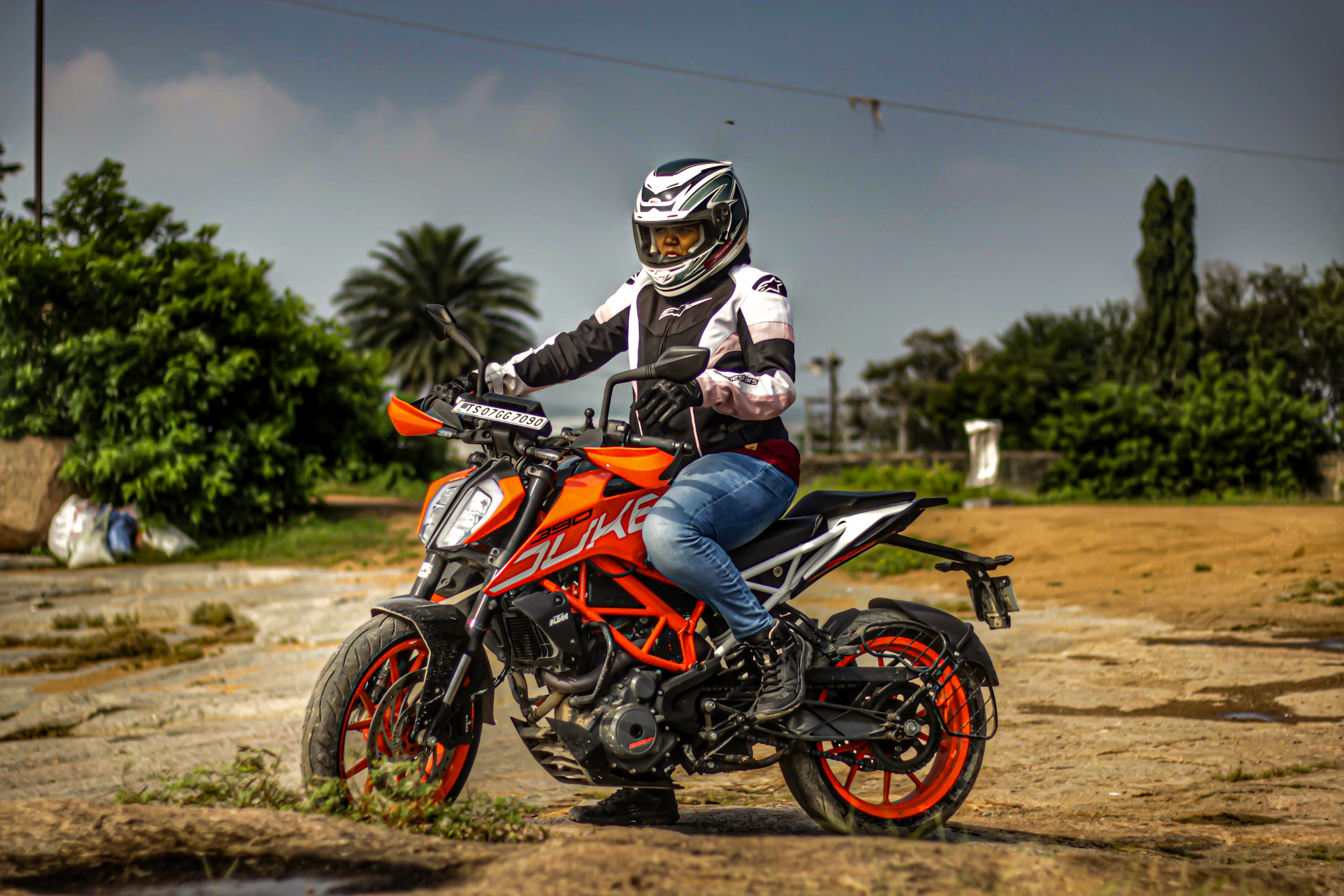
That morning we had stopped for breakfast during a ride. We were both in full riding gear, which apparently made us quite a sight. Afterwards we got back on and kept going. We didn’t always ride side by side. Sometimes you get into your own rhythm — the road, the bike, the adrenaline, the silence. You ride ahead and meet up later.
That morning, I rode ahead.
I wasn’t dead. An ambulance had already taken me to a hospital. And somehow, in the middle of all that, I had given them his name and his phone number.
When he told me this later, he said, “What a loving wife.”
I don’t remember the accident. I don’t remember being taken to the hospital. I don’t remember remembering him.
There is a version of your life that exists entirely through other people’s memories.
I was first taken to a government hospital in Suryapet. The doctors there told my husband I needed to be moved immediately, so he brought me back to Hyderabad in an ambulance. Three and a half hours. He didn’t break down. He kept me conscious the whole way, talking to me, making sure I followed his instructions.
Apparently I listened to him and did everything he asked. I have no memory of this. I only know because he told me.
Waking up
I woke up in the hospital three days later. At least, that’s what I was told.
I didn’t know where I was, or why there were so many people around me, or why I couldn’t move properly. There were tubes everywhere and machines beeping. People kept coming in and out, and everyone seemed to know what was happening except me. I looked at my husband and asked him what had happened. He said I’d been in an accident.
I still didn’t understand.
My spectacles were missing.
For someone who can’t see without glasses, this was a crisis of its own. Faces were blurry. The room was blurry. The people around me were shapes. And somewhere in all that blur I was trying to work out what had happened to my own body.
All I knew was that I was awake, and everyone around me seemed to think that was a very big deal.
It was. I just didn’t know why yet.
My husband told me. So did the doctors. So did my mother, who was there on and off, and everyone else who came in during those first days. I was still trying to work out why I couldn’t turn on my side.
It was the external fixator. Metal, protruding from my thigh and my shin, holding the knee together. Nobody had to explain that one to me. I understood the fixator before I understood anything they were saying.
That was when it stopped being information. The doctors and nurses knew what was happening to my body before I did. I was going to be in that hospital a long time, and surviving the accident had only been the beginning.
The surgery
Before the first surgery, the heads of all three departments sat my husband down and explained everything. The impact. The damage. How the bones had broken and shattered. How they would open my head to fix the crack. How the cheekbone would be repaired. How the shattered knee would be held together with a wire and an external fixator.
He sat through all of it alone.
The surgery lasted seven and a half hours. Ortho, neuro and plastic surgery all had a role. Over the following months I went in for five operations and two procedures, as far as I can remember.
When people hear about an accident, they assume you were riding fast. They assume it because it’s the only version that makes sense to them. We were particular about our gear. We wore Bell helmets.
At Care Hospitals, the doctors told my husband that if it hadn’t been a good helmet, I would have been brain dead. They could tell from the damage. They read the impact off my skull because there was nothing else to read it off — no witness, no report, no account. That helmet is the only object that was actually there.

I wrote to Bell afterwards to thank them. It was an odd letter to write.
I still have it. It’s the only thing I have from that morning.
When independence disappears
At first I was concerned with small things. Why couldn’t I move. Why was everything difficult. Why did I need help with things I had always done on my own.
I have always been fiercely independent. I liked getting up, moving around, deciding things, handling whatever needed handling without asking anyone. Then I needed help with eating, moving, going to the bathroom.
The hardest thing I had to learn wasn’t how to walk again. It was how to let other people do things for me.
My life felt like chaos. I couldn’t accept what had happened, and I cried until I fell asleep. My parents and my husband would pat my back to help me sleep, like I was a child again.
When the hospital becomes your world
For a while the hospital was my entire world. My days were no longer divided into work, meals, errands and meetings. They were divided into medicines, procedures, doctors, nurses, sleep and pain.
After a while you start recognising people by their footsteps and voices. You begin to notice who is kind, who is patient, who is in a hurry, and who takes a few extra seconds to make sure you’re okay. When you are lying in a bed for weeks, those few extra seconds mean a lot.
The nurses and housekeeping staff on the 9th floor of Care Hospitals, Gachibowli were extraordinary. They were genuinely surprised to hear that a woman biker had been in an accident. Aruna, from housekeeping, was one of the warmest, most grounded people I have ever met. Suvaimi, one of the nurses, would steal whatever time she could to sit with me and talk. They shared small stories from their own lives, not to fill the silence, but to give me something to hold onto.
The ICU was the heaviest place I have ever been. I was in pain and so was everyone around me. Some cases were far worse than mine. That ward has seen more sorrow than most people will witness in a lifetime.
Every time they wheeled me into theatre I wished for a miracle. I imagined the doctor walking in to say I had recovered beyond all expectations. I held onto that every single time.
My parents and my in-laws were there constantly. My parents split their time between my sister’s place and mine. She was pregnant, and we decided not to tell her. She knew something was wrong. She always does. But she waited. She delivered safely. The baby is fine.
My second sister-in-law gave blood for me during the main surgery. Then she stayed. Not for a few days, but for a long time after. I don’t know how to thank her for that, so I’m putting it here. Thank you akka.
You see people differently when you are completely dependent on them. Some show up because they care. Some show up because they feel they should. An accident has a strange way of sorting people without asking you to do the sorting yourself. Some disappear altogether.
At night, when everyone in the room was asleep, I would wake up with a jolt and it would hit me all over again.
Hospital. Accident. This is real.
And I would lie there, trying to wrap my head around it, until sleep came back.
This is just the beginning of a very long road filled with pain, fear, disgust, chaos and giving up the will to live every second.
Leave a Reply